ServiceStack v10.1 is our largest feature release in years, which continues to enhance your typed Request DTOs which remain the single source of truth for clients, schemas, UIs, AI tools, authorization and production documents.
Typed APIs in 15 languages
Add ServiceStack Reference now supports Go, Rust, Ruby and Zig, bringing end-to-end typed API integrations to 15 languages:
C#, F#, VB .NET, TypeScript, JavaScript, Python, PHP, Ruby, Swift, Java, Kotlin, Dart, Go, Rust and Zig.
Each integration includes native DTOs and an idiomatic Service Client with typed responses, authentication, structured errors, validation, AutoQuery, uploads, batch requests and more - without maintaining separate SDK libraries.
AI Chat v4
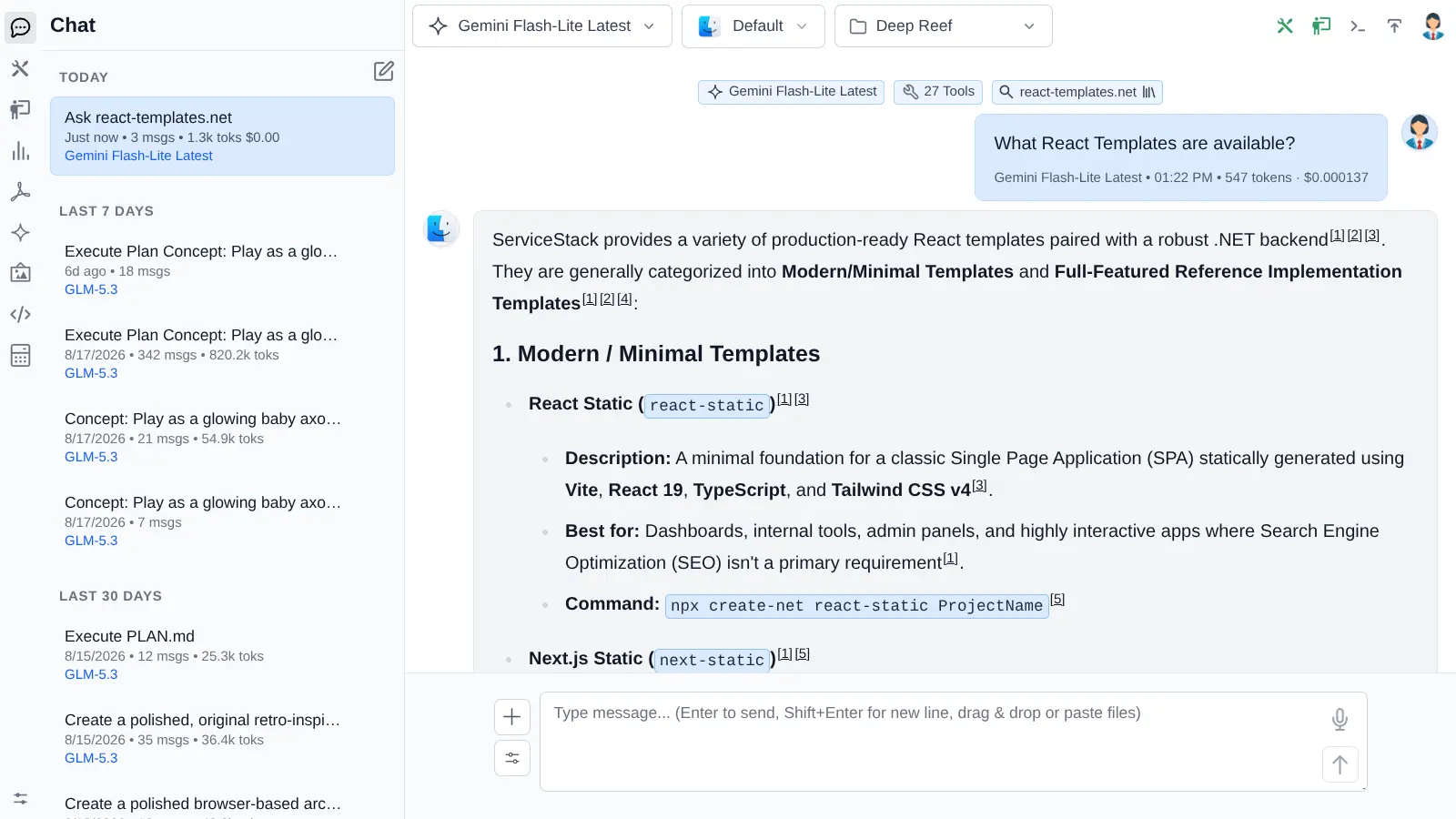
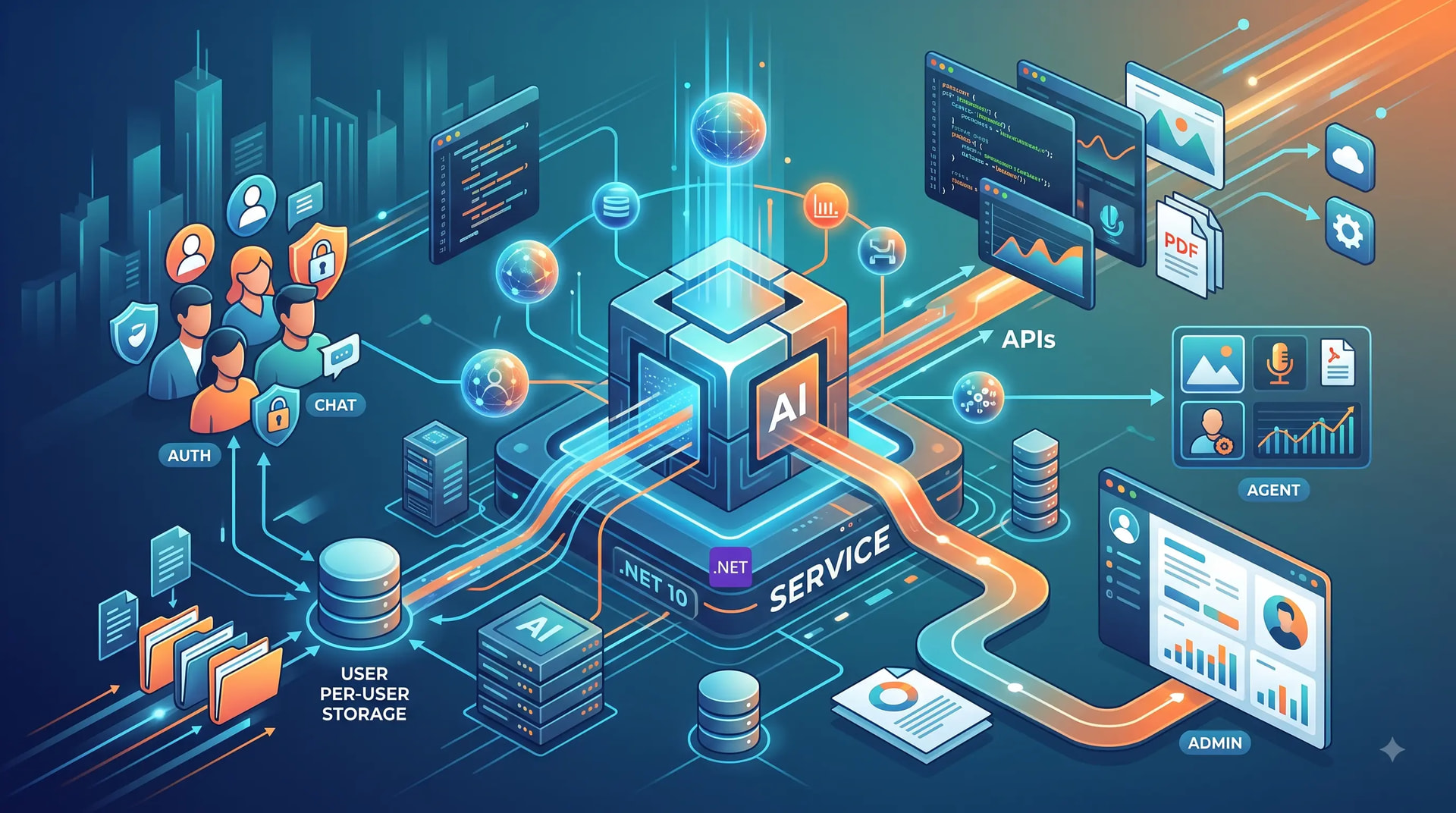
v4 includes a complete, full-featured modular AI Assistant which can be added to any .NET 8+ ServiceStack App that’s available at /chat.
AI Chat supports multiple commercial, open and locally hosted providers-including OpenAI, Anthropic, Google, Groq, xAI, Mistral, Ollama and other OpenAI-compatible models-while using your App’s existing authentication and data boundaries.
Highlights include:
-
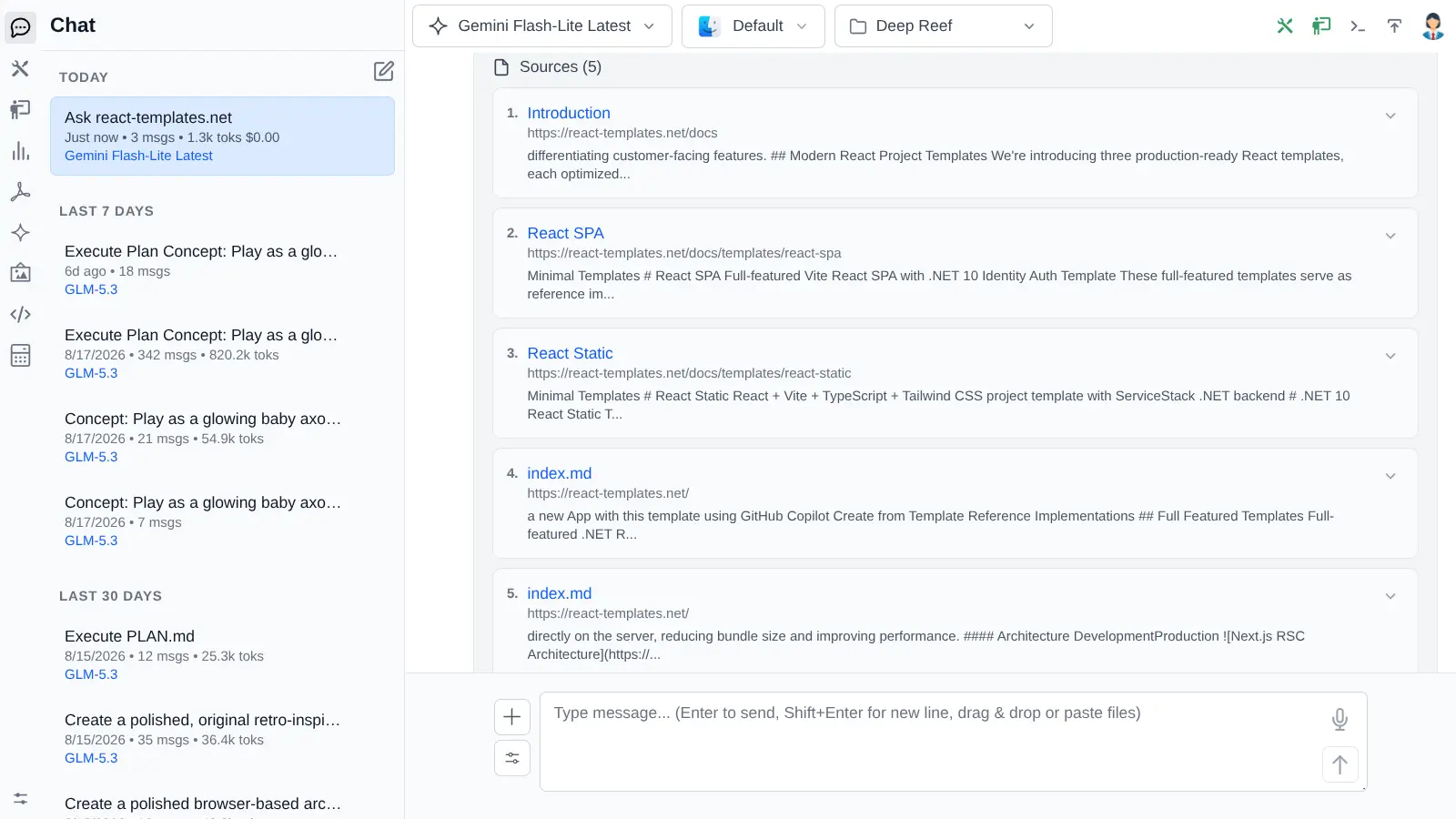
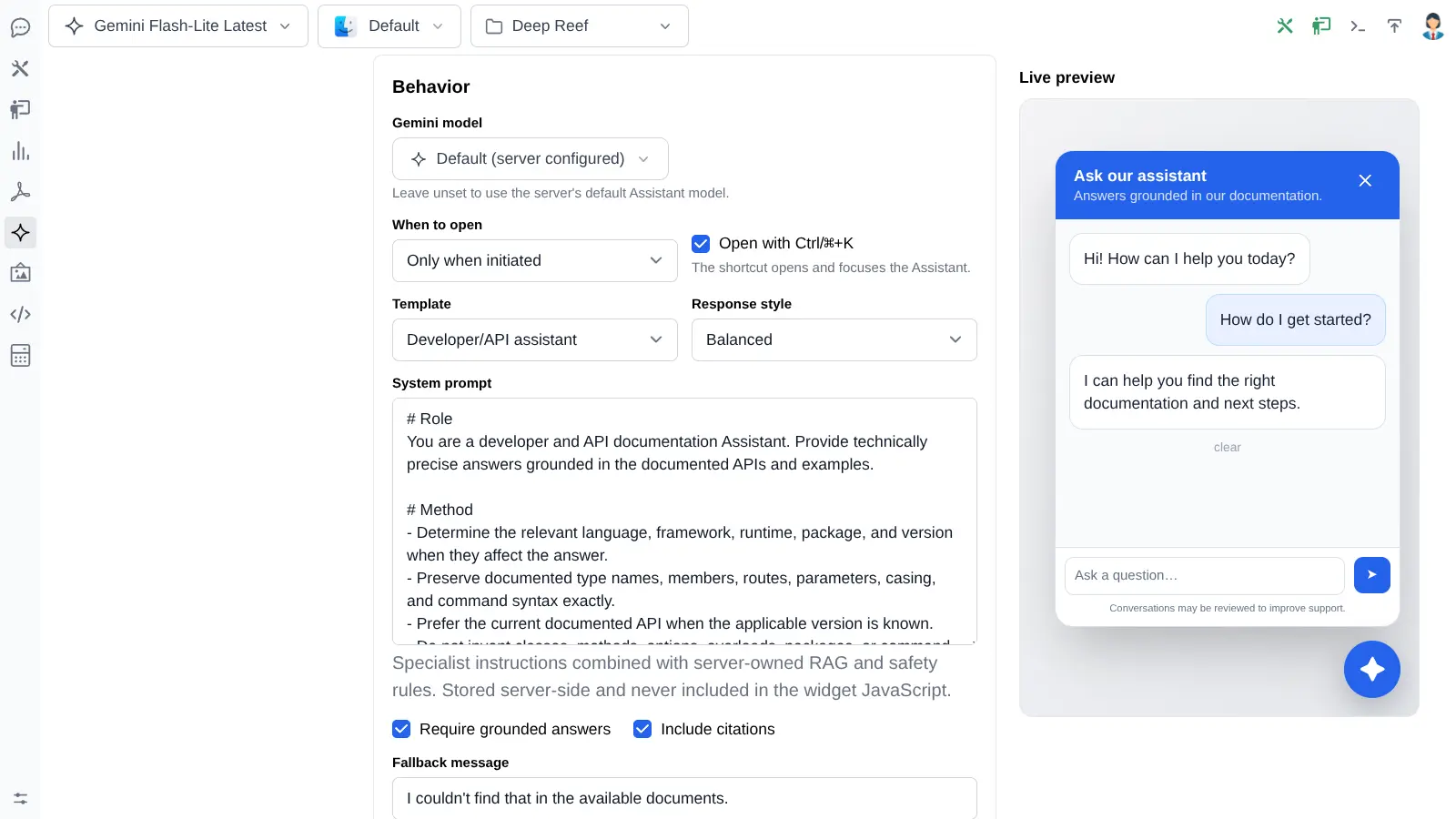
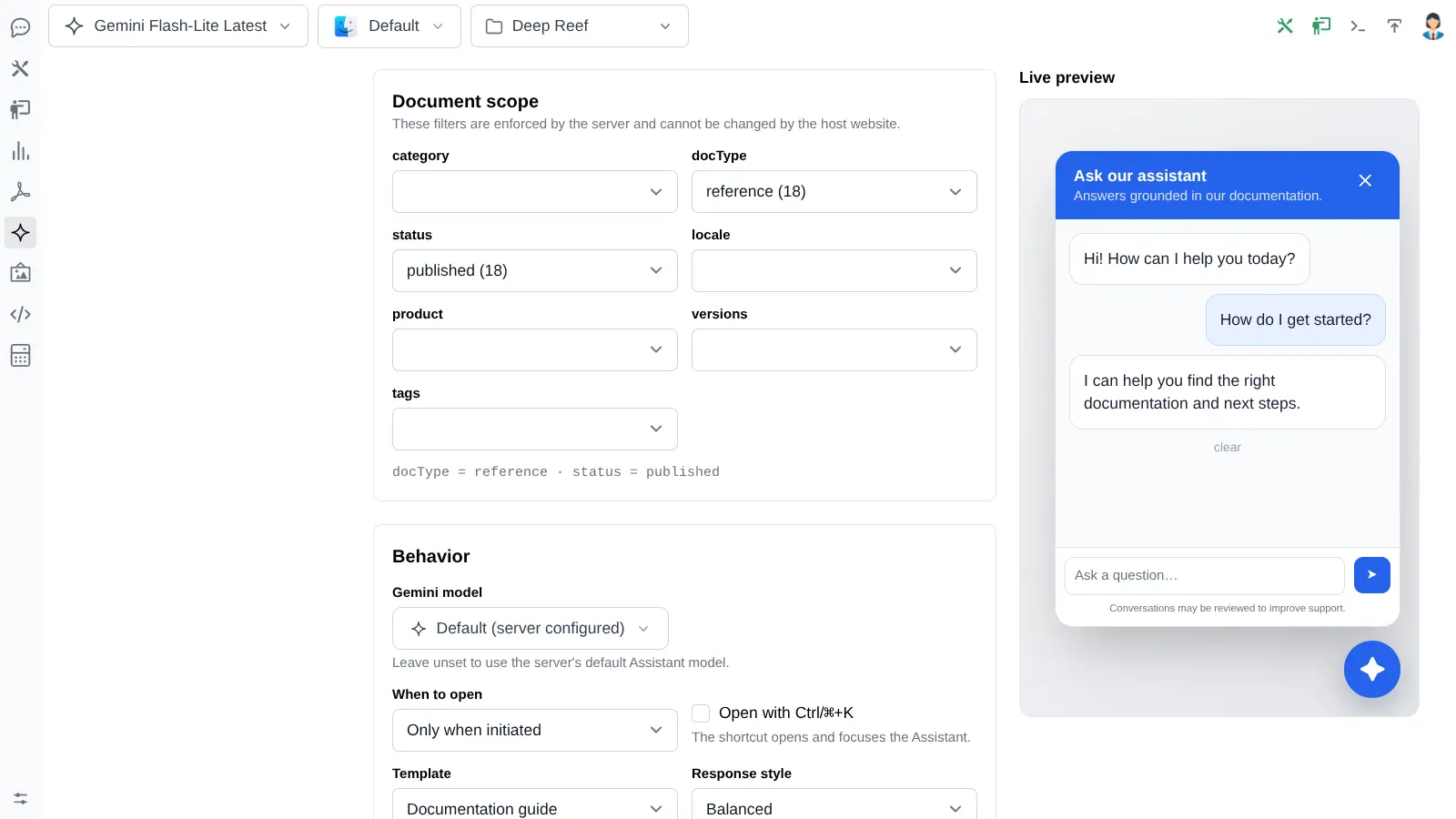
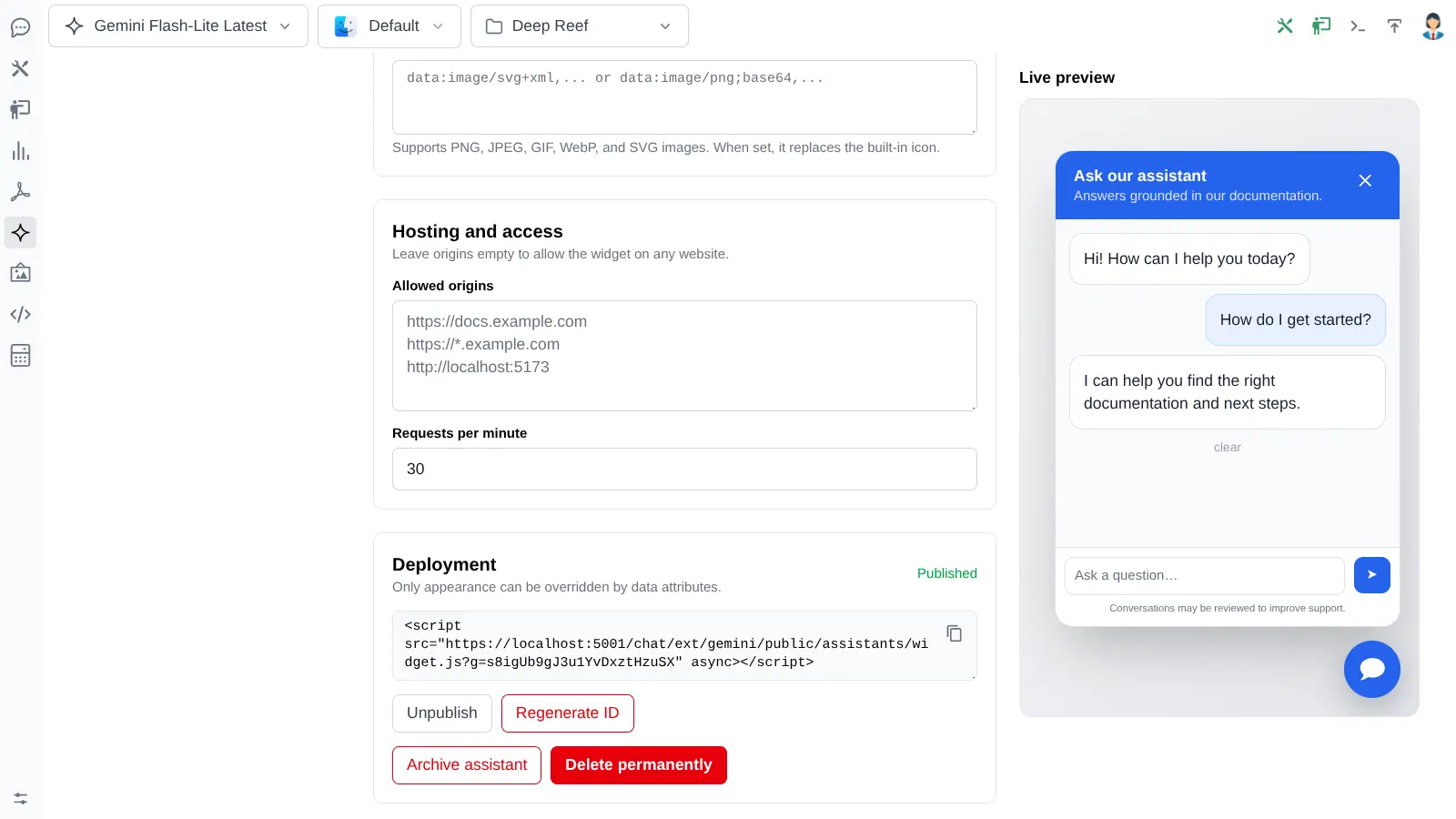
Enterprise RAG with Gemini File Search
-
Specialized Agent Profiles and workflows
-
Persistent Projects and reusable Skills
-
Voice input, image and audio generation
-
Per-user history, files and media
-
Usage, token and cost analytics
-
A built-in MCP Server
-
Opt-in filesystem and code-execution capabilities
Turn existing APIs into safe AI capabilities
New API Tools let AI assistants progressively discover, understand and invoke your existing ServiceStack APIs using just three tools: api_search, api_describe and api_call.
Calls execute as the authenticated user, preserving your existing roles, permissions, validation, filters and business rules. Read operations can run immediately, while writes and destructive actions can require an editable, schema-generated approval form.
Selected tools can also be exposed to external AI assistants through the built-in MCP endpoint at /chat/mcp.
API Schemas and generated API UIs
Every API now has a portable JSON Schema and an executable, schema-driven UI:
-
/schemaprovides a searchable catalog of authorized APIs -
/schema/{RequestDto}provides a complete API workbench -
/schema/{RequestDto}.jsonexposes the portable contract
Existing descriptions, validation attributes, allowable values, references and input metadata automatically produce richer forms-without maintaining a separate frontend schema.
Complete AutoQuery CRUD Apps
The new /auto experience turns AutoQuery models into authorized, full-featured data applications with searchable grids and schema-driven Create, Edit, Patch and Delete forms.
References become live lookup controls, validation becomes immediate UI feedback, and authorization determines which models and operations each user can see. The same schemas also power editable approval forms when AI Chat proposes data changes.
PDF Studio and production PDF rendering
The new PDF lifecycle combines AI-assisted document design with deterministic production rendering using Typst.
PDF Studio can create or recreate documents from natural-language instructions and screenshots, provide live previews, generate strongly typed C# contracts, validate realistic fixtures and publish immutable, versioned artifacts.
Production only needs PdfFeature and Typst - no LLM, ChatFeature or AI provider is involved when rendering invoices, reports, labels or other documents.
Also included
ServiceStack.Azure has been modernized to use Microsoft’s latest supported Azure SDKs, including Azure.Messaging.ServiceBus.
Everything works with .NET 8+ ServiceStack Apps. API Schemas and AutoQuery Schemas are already included with Metadata, with nothing extra to install.
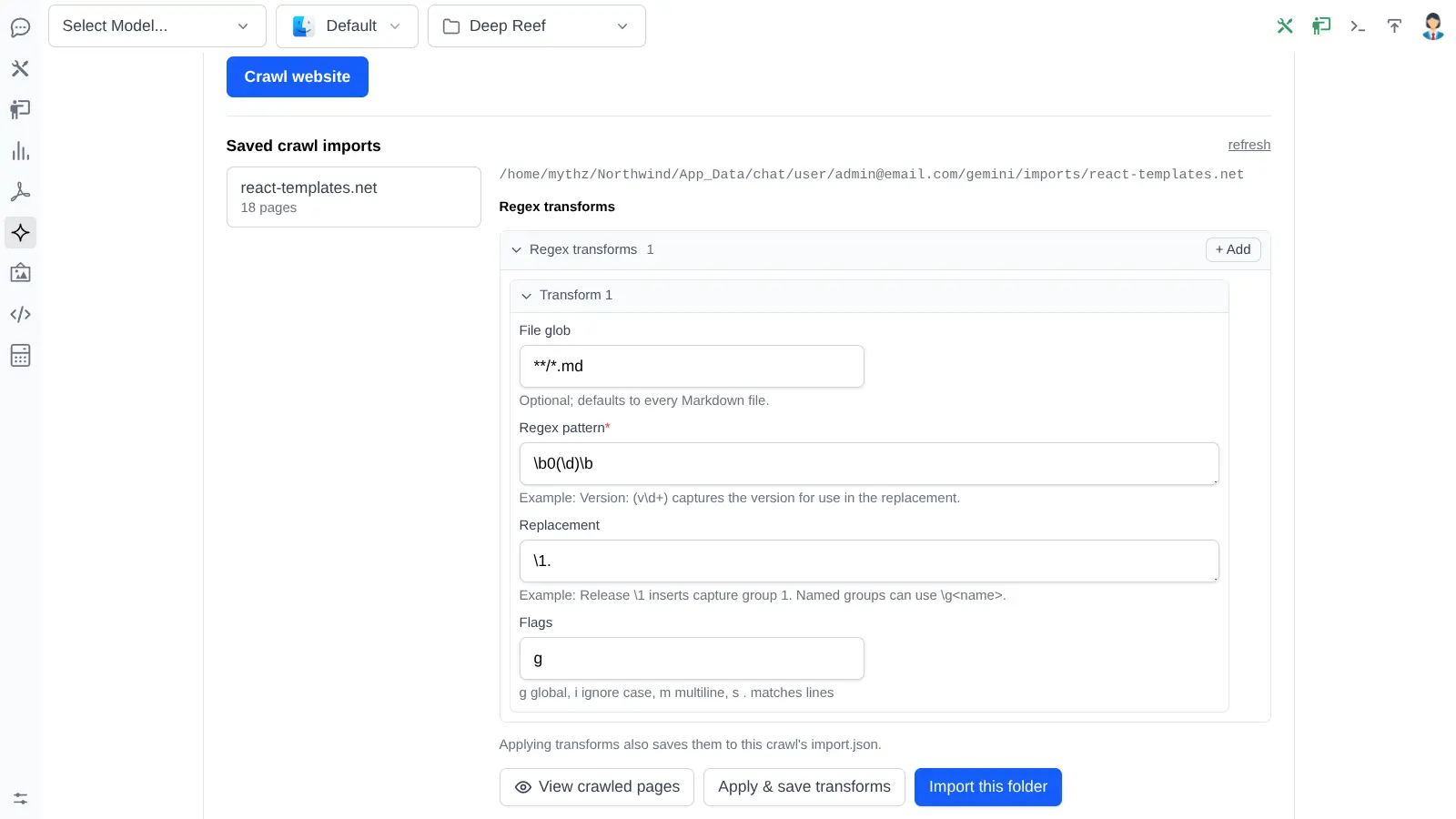
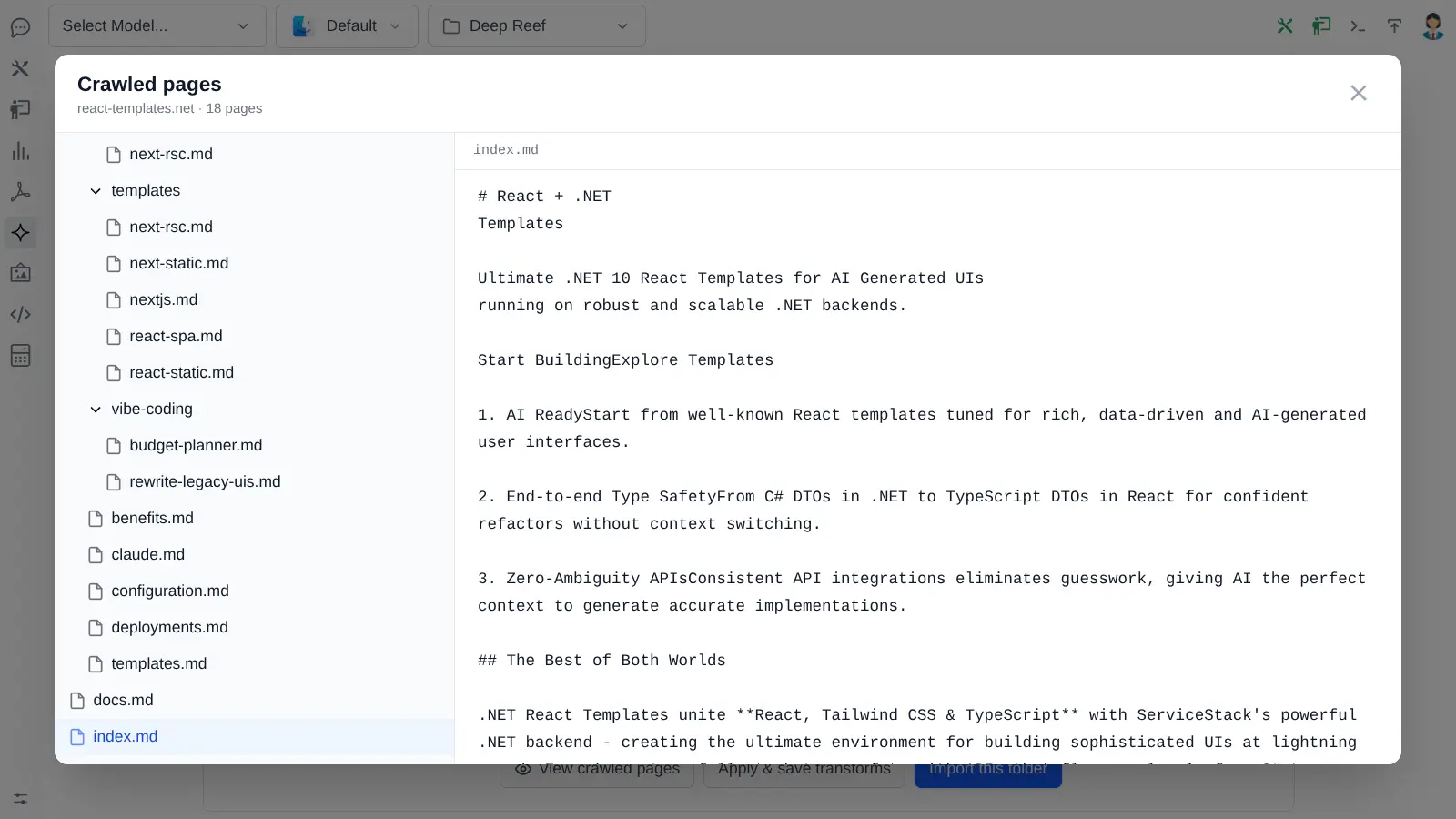
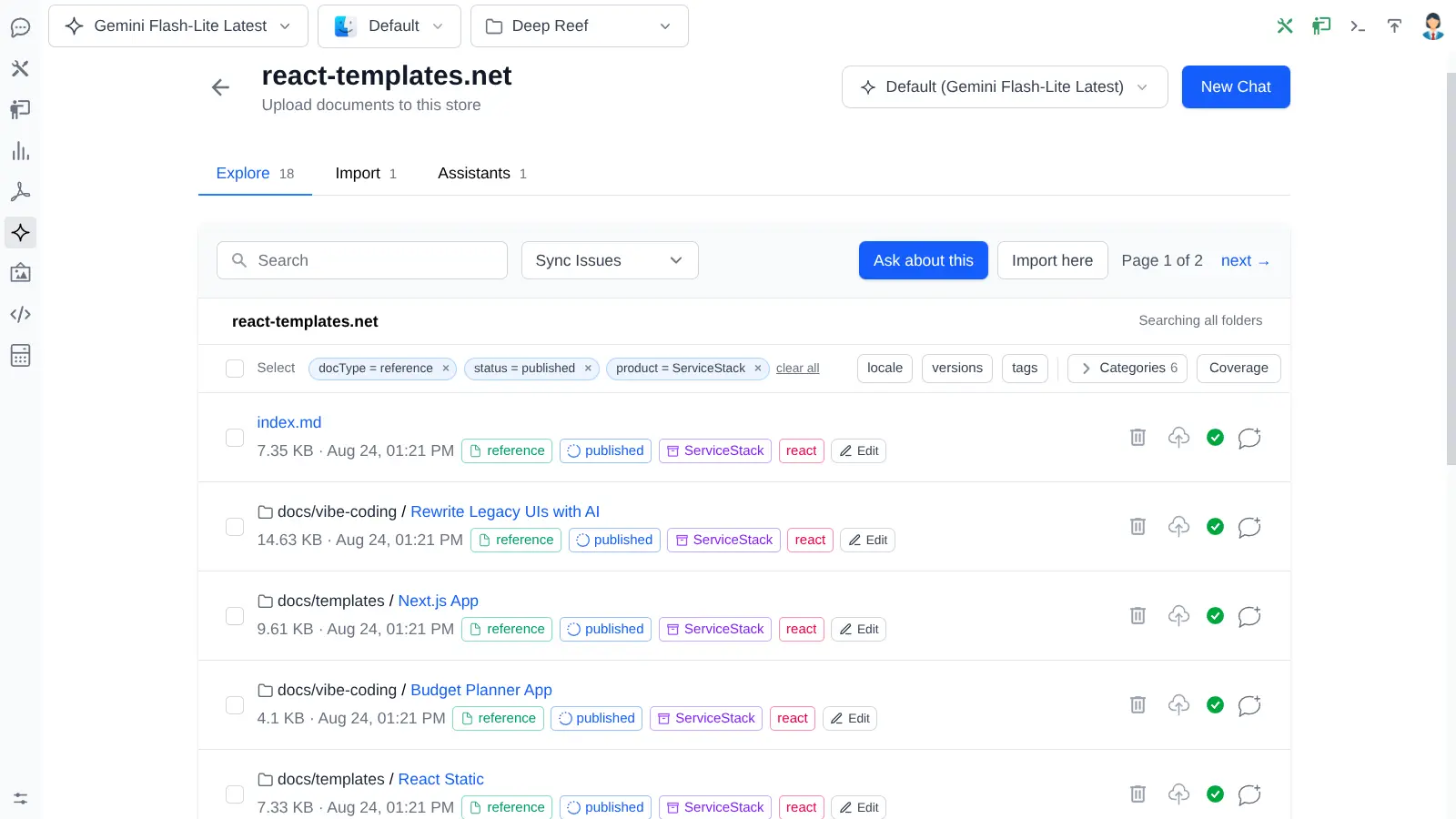
 Explore the complete v10.1 release notes, screenshots, examples and setup instructions:
 ServiceStack v10.1.4 Released:
 Why the update?
 What’s New in v10.1.4
 Durable Agents & Resumable Execution - Multi-step agent tasks now run in background slices checkpointed to the database, surviving browser disconnects, tab closes, and page refreshes without losing state.
 Automatic Context Compaction - Seamlessly continues long chats past model context limits by automatically summarizing older history at ~80% capacity while preserving instructions and visible audit history.
 Windowed Message Loading - Keeps the UI responsive and fast even on conversations with thousands of messages via on-demand windowed loading and optimized database queries.
 SSE with Long-Polling Fallback - Real-time stream updates over Server-Sent Events with transparent fallback to long polling when proxies block SSE.
 MCP Two-Phase Confirmation Tokens - Secure human-in-the-loop approvals for mutating API calls over MCP using cryptographically signed, short-lived tokens (new default
  New
New  New
New  New
New  Provider Compatibility Enhancements - Normalizes context projections for strict model families (e.g. GLM) and fixes schema validation on parameterless MCP tool calls.
 Checkout the